


Application of vibrating mirrors in LiDAR
2024-12-19
Application of vibrating mirrors in LiDAR
I. Introduction
Laser radar (LiDAR) is an advanced remote sensing technology, which is widely used in the fields of terrain mapping, automatic driving, environmental monitoring and so on. The galvanometer is an important part of LiDAR system, and its performance directly affects the scanning range and accuracy of LiDAR. This paper will introduce the application of galvanometer in LIDAR.
Second, the basic principle of galvanometer
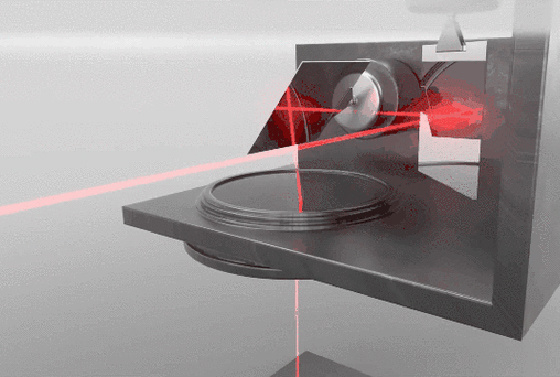
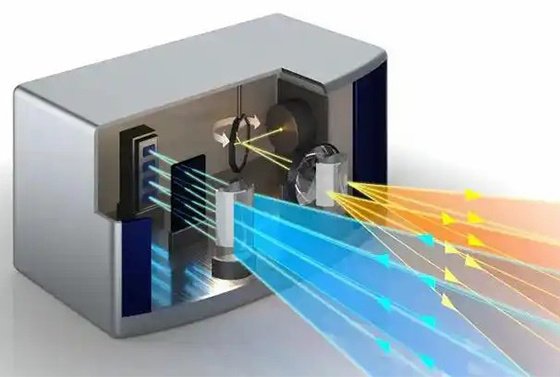
Vibrating mirror is an optical component, through the electrical signal to control the angle of its internal lens changes, so as to realize the scanning and orientation of the beam. In the laser radar system, the main role of the galvanometer is to guide the laser beam to the target area, and receive the reflected signal.
Third, the laser radar in the galvanometer application
1. Scanning control: the galvanometer is mainly responsible for scanning the laser beam in LIDAR. By controlling the rotation speed and direction of the galvanometer, the scanning path of the laser beam in the air can be realized. This allows LIDAR to obtain a wider range of spatial information.
2. Target localization: LIDAR realizes target localization by transmitting the laser beam and receiving the reflected signal. The galvanometer plays a key role in this process, ensuring that the laser beam can accurately hit the target area.
3. Data Acquisition: The precise control of the galvanometer enables the LIDAR to acquire highly accurate data. By scanning the area at different angles, LiDAR can collect rich spatial information to support various applications.
Fourth, the impact of the galvanometer on the performance of LiDAR
The performance of the galvanometer directly affects the scanning range and accuracy of LIDAR. High-performance galvanometer can realize faster and more accurate scanning, thus improving the overall performance of LIDAR. In addition, the durability and stability of the galvanometer is also the key to ensure the long-term stable operation of the LIDAR.


Related News
Welcome To Leave a Message For Consultation
Fill in your requirements >>

CONTACT US
Email: export@gainlaser.com
WhatsApp: +86 13129170398(Nikki)
Add: 2nd Floor, Building A, Zhongli Sunshine Technology Park, No. 5 Jinlong 2nd Road, Baolong Community, Baolong Street, Longgang District, Shenzhen